How to Write a Coffee Shop Business Plan: Your Operations Plan
Real lessons on hours of operation and service model from two Stay Golden locations — how to build the Operations Plan section of a coffee shop business plan around actual volume, not assumptions.
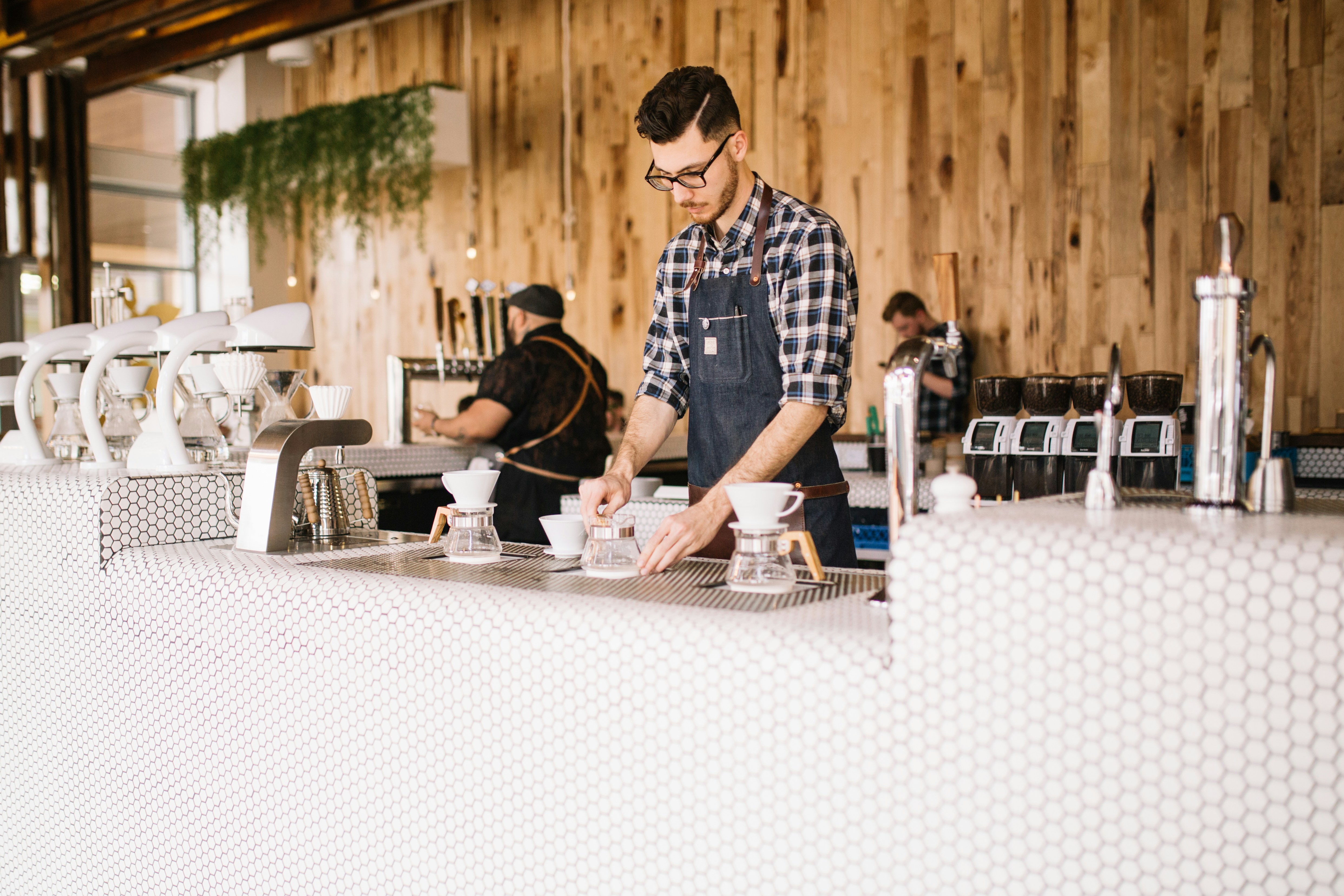
Part 5 of a series on writing a real coffee shop business plan. New here? Start with Part 1: menu and market, catch up on Part 2: competitive analysis, read Part 3: building your brand, or catch up on Part 4: legal structure.
You've got a menu, a market, a brand, and a legal foundation. Now we get into something a lot less glamorous, but it's the part of owning a coffee shop where, if you're not careful, you can lose a lot of money: how you actually run the place, day to day.
This is your Operations Plan — Section 6 of your business plan. It covers your location, your hours, your service model, your staffing, and your key vendors. A lot of this section pulls together research you've already done earlier in this series, even if it didn't feel like "operations" work at the time. Hours and service model, though, are two decisions I got wrong myself the first time — and getting them wrong is expensive.
Location and Square Footage
This section of your plan needs your address, your square footage, and a sentence or two on why this location fits your concept. Straightforward on paper. But the real work behind it — the research that actually justifies the location you've chosen — is covered in an earlier series on this site, "How Much Does It Cost to Open a Coffee Shop."
Your square footage needs and the reasoning behind them live in Part 1 of that series, with real numbers from two very different builds of mine, showing exactly how much your square footage can vary depending on your menu and your space. The deeper location research you need to do before you know you've made a good decision — including how much of your customer base is actually around during your hours — lives in Part 3 of that same series.
Take your time on that second link, because it does more for you than it may appear at first. That research doesn't just tell you whether a location will make you money — the findings are more than enough to write the location description this section needs. It's also the same research that becomes your revenue projections in Part 7. It's one piece of work doing three different jobs for you. By the end of this series, I'll show you exactly how to pull all of that together into one finished document — that's the surprise I keep mentioning.
Your Hours Are a Labor Decision, Not Just a Guest Experience Decision
Most first-time owners set their hours based on when they want to be open. The owners who see greater success set their hours based on the revenue their open hours produce versus what those hours actually cost in labor.
I learned this one the expensive way.
When the original Stay Golden opened, we set out to be a true all-day café — breakfast, lunch, a midday happy hour, into dinner and drinks. We were open until 7 or 8pm most nights. It felt right for the concept.
It wasn't right for the neighborhood. That location cleared out hard by 3:30 or 4pm — it was a working neighborhood, and people were headed home, not looking for a dinner spot or a nightcap. We bled money those last few hours, night after night, and it caused us to pay attention to what the data was actually telling us.
So we cut. First from 8pm to 6pm. Then, once we really looked at the pattern, down to 4pm.
Here are the results of those decisions, in real numbers. Cutting those four hours eliminated roughly four people's wages every single day — a minimum of one or two kitchen staff and one or two front of house who no longer needed to be on the clock for that stretch. That's a serious chunk of labor cost gone. But there was a second effect. Those slow final hours were still pulling from the tip pool, even though they weren't generating much in tips. Cutting them meant the team's actual tip wages went up, because the pool wasn't being diluted by hours that cost tip money without producing it. Cutting hours didn't just save the business money — it put more money in my team's pockets.
Every hour you're open has to justify itself in revenue. The point isn't that you need a "full crew" for every hour — the point is that if your last couple of hours aren't producing enough revenue to pay for whoever's there, that's a real signal to reconsider those hours. Know your hourly revenue pattern before you set your hours in stone.
One more thing worth noting here, especially if you're still pre-opening. If you've done the work earlier in this series, you've got an approximate number of transactions per day for your location — a real, researched estimate, not a guess. That number alone doesn't tell you exactly how many people you'll need on the floor at any given moment; for that, you'll eventually need your full product mix and average ticket, which we build in Part 7. But you can still put that transaction number to work right now. Transactions almost never spread evenly across your hours — they tend to follow something closer to a bell curve, slower at open, ramping up toward a midday or morning peak, then tapering off. Roughly sketching out where your busiest stretch is likely to fall gives you a real starting point for thinking about when you'll need more people on the floor and when two people are probably plenty. You'll be able to get far more precise once you've built your full financial projections later in this series — but doing this rough weighting now will make that work a lot easier when you get there.
Choosing Your Service Model
The other decision in this section — your service model — sounds like a formatting choice. It isn't. It shapes your staffing, your costs, and honestly, whether people come back.
Most cafés and breakfast spots choose between two real options: full service, where guests are seated and served at their table throughout the visit, or counter service, where guests order at a register and find their own seat. Some run a light hybrid of the two. A true quick-service model — the fast-food format — is mostly off the table for a concept like this; it's built for a different kind of business entirely.
Here's an example from my story of when I chose the wrong service model.
When we first opened Stay Golden, we believed the next evolution of the Nashville all-day café would include a higher-touch, full-service experience — a host, a server, the whole thing. So when we opened, we opened with full service. Our guests were seated, they ordered at the table, and we checked on them throughout the meal.
Within two or three months, the market told us clearly, with their dollars, that this wasn't what they wanted. And the why was specific. Given our coffee background, people walked in expecting a coffee shop — somewhere to sit, open a laptop, and zone out for a while. A server checking in periodically didn't read as good service to that guest. It read as pressure to leave. We were caught in a strange in-between that our market, at that time, didn't know what to do with.
By November — we'd opened in August — we made the call to become fast casual. Guests would order at the register, sit wherever they liked, and we'd bring everything to them. We barely touched the menu. The food and coffee were never the problem. It was purely the model.
It was important to me that the service still felt high-touch, even inside a counter-service format. So we chose intentional places within that model that actually allow for real service:
- We hand-deliver every drink.
- We hand-deliver every food item.
- We pre-bus and bus each table.
Each one of these is a genuine touchpoint — a chance to check in, catch a problem, and make sure someone's actually doing okay.
The result was almost immediate. We saw roughly a 30% jump in revenue once the model matched what our market actually wanted. The product was never the issue. The format was.
If you're choosing between these models, the real question isn't which one you'd prefer to run. It's what your specific guest, in your specific market, is actually looking for when they walk in the door.
The Same Lesson, a Second Time
When Stay Golden relocated to its current spot in The Nations, we assumed similar volume to our old location, and we kept the staffing structure the same at first. It didn't take long to realize the volume simply wasn't there, and we had to get sharper about the schedule.
Here's where the hours-and-labor logic showed up again, in a more precise form. At our old hours, we ran three shift blocks on the floor — opener, mid, and closer — mostly to keep any single shift from running too long. But once we looked hard at our actual volume, we realized something: Monday through Thursday, we almost never needed more than two people on the floor. Friday's a different story — our volume runs higher, so we still keep the mid-shift that day.
The real constraint wasn't coverage. It was hours. If we cut the mid-shift on those slower days but kept our closing time where it was, one of the two remaining shifts would have had to stretch past eight hours to cover the day — which we didn't want to do. So we closed one hour earlier. That single hour let us drop the mid-shift on Monday through Thursday, keep two people on the floor with real overlap, and keep both of their shifts under eight hours. One hour of closing time, one fewer position on the schedule most days, and a real reduction in labor cost — because, honestly, that last hour wasn't producing much revenue anyway.
What you need to do is ensure you look at your actual volume and use it to build your schedule. Your schedule should serve the revenue of your actual hours. Let the data tell you what your hours and your staffing should be, not what you assumed they'd be when you opened the doors.
For the deeper staffing math — building your minimum and maximum crew, scheduling to volume instead of guessing — that's covered in Part 4 of our cost series, so I won't re-teach it here.
Staffing, Vendors, and Your POS
A few more things belong in this section of your plan, and the good news is you've already got what you need for most of them.
You've already got the pointer to the deeper staffing math just above. Your POS system and the good/better/best thinking behind choosing one is covered in Part 1 of the cost series as well.
Key vendors — your roaster, your food suppliers — just need to be named here: who you're working with, and why. If you haven't locked those relationships in yet, that's fine. Note who you're in conversation with and move forward.
What Comes Next
You've now got a real operations plan. Even if you're pre-opening and don't have live data of your own yet, use the principles here to build a well-informed, data-driven projection — so your labor costs and staffing numbers in your plan are as close to accurate as possible, instead of a guess. Next, we get into how you'll actually get people in the door. That's Part 6: your marketing and sales strategy.
Everything in this post shows you how hours and service model actually play out in a real coffee shop, and mistakes that taught me some hard lessons. Knowing the principle is one thing — building the actual schedule, with the full minimum-and-maximum crew logic and the scenario math behind it, is a different level of work. Inside the How to Open a Coffee Shop Masterclass, there's a complete scheduling framework that does exactly that — skeleton crew and max crew planning, scenario modeling, and a full payroll schedule builder. It's not open yet, but you can join the waitlist now, and everyone on the waitlist gets an exclusive discount when it launches.
Frequently Asked Questions
How do I decide my coffee shop's hours of operation?
Your hours should be driven by your actual revenue pattern, not by when you'd prefer to be open. Track when your real business happens and be honest about which hours are producing meaningful revenue and which are just adding labor cost. If a stretch at the end of your day isn't producing enough revenue to cover whoever's working it, that's a real signal to reconsider those hours.
What's the difference between counter service and full service for a coffee shop?
Counter service means guests order at a register and find their own seat, while full service means guests are seated and served at their table throughout the visit. The right choice depends heavily on what your specific market expects from a business that presents itself as a coffee shop. A concept with a strong coffee identity often gets read as counter service by guests by default, even if the owner intends something more elevated, and going against that expectation can genuinely cost revenue.
How does reducing operating hours affect staffing costs?
Cutting even an hour or two off your day can save more than the direct wages for that time. Slow, low-revenue hours often still require a minimum crew to be present, and in tipped environments, those hours can quietly dilute the tip pool for hours that generated little in actual tips. Reducing hours to match real demand can lower total labor cost while simultaneously increasing take-home pay for the staff who remain.
What should be included in the Operations Plan section of a business plan?
A complete Operations Plan covers your location and square footage, your hours of operation, your service model, your staffing structure, your key vendors, and your point-of-sale system. Each of these should be grounded in real research and real numbers rather than assumptions, since these are the operational decisions that most directly determine your labor costs and your day-to-day profitability.
Can a coffee shop change its service model after opening?
Yes, and sometimes it's the right call. If a service model isn't matching what guests actually want, that mismatch usually shows up quickly in traffic, reviews, and revenue. Changing models doesn't have to mean changing your menu or your concept, just how that concept is delivered. The goal is finding the format guests are actually asking for, even if it's different from what you originally planned to offer.
Ready to build this the right way? Join the How to Open a Coffee Shop Masterclass waitlist for the full scheduling framework, plus the financial model that turns everything in this series into a plan you can actually defend.