The Hidden Cost of Barista Training: A Coffee Shop Case Study
A real coffee shop case study: how a $30,000-a-year dedicated trainer, a scheduling nightmare, and a month-long onboarding process got fixed with a video-based training system.
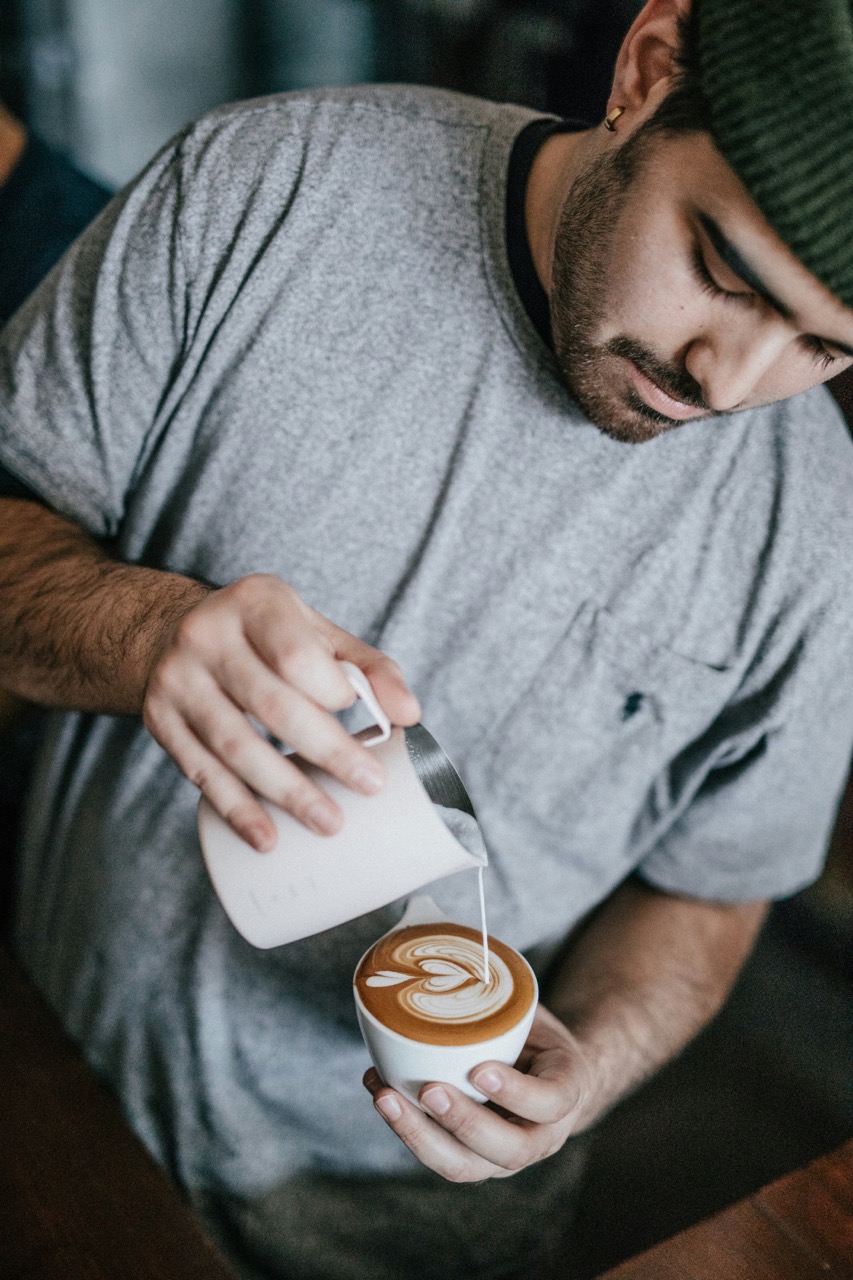
How I cut new-hire onboarding from a month to a week — and got myself out of the training trap — at my own café.
A dedicated barista trainer cost me somewhere north of $30,000 a year.
I'm familiar with that number because I paid it for years. At my own café — Stay Golden, in Nashville — that's how I chose to train my team: I employed a dedicated trainer to walk every new hire through my training system one-on-one, so I wouldn't have to be the trainer myself. It worked. My team was good. But it was slow, it was expensive, and it quietly chained both me and my best people to a training cycle we couldn't get out of.
Now — maybe you're already thinking that's not me. I don't pay for a dedicated trainer. And you're probably right that most owners don't. So before you decide this story isn't for you, let me tell you what I've learned after fifteen years in this: however you train right now, it's costing you. The bill is just hidden.
Maybe you lean on the free training your roaster provides. Maybe you do it yourself — show a new hire the ropes and let them pick up the rest as they go. Maybe you've cobbled together a working-ish system from videos and bits and pieces over the years. Or maybe, like me, you decided to level up and bring in a dedicated trainer. Each of those has a real, measurable cost — in wasted product, in lost productivity, in inconsistency, in your own time — and I've broken down each one in its own piece:
- If you lean on your roaster's training, here's the hidden cost of that »
- If you show new hires your own way and let them figure out the rest, here's what that "I show, you do" approach actually costs »
- If you've pieced together your own system from the internet, here's why that hodgepodge quietly bleeds money »
- And if you've hired a dedicated trainer, here's the real cost of that route » — it's the one I went down myself.
And if you want to see a real dollar figure for your shop — what your current training approach is costing you every year, whatever method you use — run your numbers through the training cost calculator ».
So this isn't only a story about a $30,000 trainer. It's a story about the hidden cost buried in every way of training a team — and how you can fix it in your shop.
To be clear: the trainer I hired didn't build that program. I did, over fifteen years, before I ever handed it to someone else to deliver. I'm not a neutral outside consultant writing this. I built the system, Stay Golden was its first customer, and I was employee zero.
The old way worked — and it was killing me
Long before I owned a café, I ran barista education for up to 120 wholesale accounts. That's where the training system started, and I kept refining it as I brought it into my own shops.
For four or five years at Stay Golden, we ran that system the traditional way: in person, one-on-one, delivered by a dedicated trainer I had personally trained on my own material. To be clear, the trainer wasn't building anything — they were running my program with each new hire. Here's what that arrangement actually cost, and I don't mean the vague "training is expensive" hand-wave. I mean the real math.
The trainer's pay. A trainer good enough to teach my standard expected $50,000–$55,000 a year in total compensation. We paid roughly $30,000–$35,000 of that in base pay, and — because we are in Tennessee, where certain salaried employees could earn tips — supplemented the rest through tips. Either way, that's real money coming out of the business every year for one role.
The scheduling gridlock. This was the part that made me crazy. My trainer also worked regular floor shifts. So every single time I hired someone, I had to solve a puzzle: line up the new hire's schedule, line up the trainer's schedule, carve out dedicated training shifts that matched both, and pray nothing collided. When it collided — and it always collided — the training stretched out.
The timeline. The training itself is about 24 hours of actual work. Done cleanly, that's a week to a week and a half. But between everyone's competing schedules, I watched that same 24 hours drag out to three, sometimes four weeks before a new hire was fully trained and on the floor. A month of partial productivity, a month of paying someone who couldn't yet run a bar alone, all because two calendars wouldn't cooperate.
The system was never the problem. The delivery was. And the delivery had me and my most experienced people permanently stuck in a training loop.
The fix: I filmed it
At some point the obvious hit me. The overwhelming majority of what my trainer did on those shifts was explain — the same explanations, in the same order, every time. That doesn't have to happen live. It can be filmed once, done right once, and delivered perfectly every time after.
So I built it. That turned into roughly 2,000 hours of work over a couple of years, turning fifteen years of training into a complete video-based system — the Espresso Bar Training System. Ten modules, hands-on exercises at every step, and a real verification exam at the end. It's the thing I'm proudest of building, and it changed how my café runs.
Here's how it actually works:
- Modules 1 and 2 — the foundational coffee knowledge — a new hire watches on their own, from anywhere, before they ever set foot behind the bar.
- Modules 3 through 6 they work through at the shop, on a real espresso setup, alongside a veteran teammate. They watch a lesson, step to the machine, and physically do the exercise — pulling shots, dialing in, steaming milk, tasting constantly. Not just how to pull a shot, but how to tell when it's good, when it's off, and exactly what to adjust.
- Then a 6-hour shadow shift — a real shift where they do the actual barista work while a veteran keeps them out of the weeds.
- Modules 7 through 10 back at the bar, same watch-then-do rhythm, into the advanced material.
- Two more shadow shifts to cement it.
- Finally, a written and practical verification exam. The practical is video-led and specific down to the detail: 91 individual checkpoints, scored pass/fail, and the barista has to hit 90% — they can miss no more than nine — to earn their certification.
Because the exam is delivered by video, every barista gets the identical test, in the identical order, judged against the identical standard.
What actually changed at Stay Golden
Onboarding dropped from 3–4 weeks to about a week to a week and a half. Same 24 hours of training, but now I can schedule it against my team's real availability instead of solving a two-calendar puzzle. The bottleneck is gone.
I eliminated the $30K+ dedicated trainer. I don't need to employ a high-dollar trainer anymore, because the teaching is built into the videos. A veteran teammate — often a shift leader — can guide a new hire through it. That whole expensive role, the one everything used to depend on, just went away.
It got me — and my best people — out of the training trap. Now, I want to be honest here, because so much of what I teach is about getting the owner out of training, and the system absolutely does that — you don't need to be the trainer anymore. But here's how I personally use it: because the video does the heavy lifting, I sometimes choose to take the training session myself, and it costs me almost nothing to do it. Instead of standing at a machine narrating for four straight hours, the video carries three to three and a half of those active hours. My actual hands-on time drops to maybe 30 to 60 minutes of a session. I can be doing invoices, building schedules, or running the shop while a new hire trains — and step in only for the moments that need me. The system doesn't just remove the owner from training. It makes the training time so light that staying involved becomes a choice instead of a sentence.
Every barista now gets the exact same training. Same lessons, same order, same standard, same verification exam. When a person delivers training live, a single good question can derail the whole session — somebody asks about extraction science an hour before they're ready, and suddenly you've lost the morning down a rabbit hole and skipped the fundamentals. The video can't be knocked off course. Everyone comes out the other side having learned the same things and passed the same 91-point exam.
Across eight years at Stay Golden, we've trained a couple hundred baristas — and across my whole career, more than I can count. This system is the version of that I wish I'd had the entire time.
What my team says
I have a shift leader on my team right now — four years behind the bar across several different cafés before she came to us. Experienced. Genuinely skilled. After going through this training, she told me it was the best she'd ever received — that it finally explained why the things she'd been doing for years actually worked, and that she'd never gotten anything like it at any other job.
That happens in a lot of coffee shops: skilled people who were never actually taught the why underneath the craft, because their shop didn't have a way to teach it. When you become the place that finally gives them that, they tend to stick around.
And it's not just my shop. Bryce Whittington at The Belonging Co runs a team of 50-plus baristas on this same system. In his words: "Thanks to Coffee Shop Success, each person on our team is fully equipped to operate any position behind the coffee bar at any given time." A big team, every person verified to the same standard, and the owner no longer the bottleneck — that's what it looks like at scale.
Want the same system in your shop?
Everything I described is the Espresso Bar Training System — the full, certification-level program running in my café right now: ten modules, the shadow-shift structure, and the 91-point verification exam. It's $1,975 one-time, or a payment plan (as low as $195/month), and it comes with a 7-day free trial so you can see the whole thing before you commit a dollar. You train your entire team on it — not per-person pricing, the whole crew.
If you want to start smaller and get your team on the fundamentals first, the Essential Barista Training program is the on-ramp: $49/month, about 12 training hours across 7 modules, with the same hands-on exercises and verification exams so you know your people actually learned it. It's built for owners who want fast, solid onboarding without the full certification track. It also comes with a 7-day free trial.
Either way, the point is the same one I learned the expensive way in my own shop: you don't have to choose between training your team right and getting yourself out of the training trap. The whole reason I built this was to have both.
Frequently Asked Questions
How long does it take to train a new barista?
A structured program can take a barista from zero to expert-level in about 24 training hours. The real-world calendar time depends on how you schedule those hours. Using a video-based system that can be scheduled around a team's availability, a new hire can go from start to fully verified in roughly one to one-and-a-half weeks. Under a traditional one-on-one method, where a dedicated trainer's schedule has to line up with the new hire's, that same 24 hours often stretches to three or four weeks.
How much does it cost to train baristas, and do I need a dedicated trainer?
Hiring a dedicated barista trainer typically costs $30,000 or more per year in base pay alone, and a skilled trainer often expects $50,000 to $55,000 in total compensation. You don't necessarily need one. With a video-based training system, the teaching is built in, so a veteran teammate or shift leader can guide new hires through it instead, removing the most expensive role in most training setups and the risk of everything depending on one person.
Is there a barista training program built for coffee shops instead of individuals?
Yes. Most barista courses are aimed at hobbyists or individual learners. The Espresso Bar Training System is built for coffee shop owners training a whole team: one price covers unlimited staff, every barista gets the identical lessons and the same verification exam, and the structure is designed to get the owner out of the training bottleneck rather than deeper into it.
How do you train baristas consistently across an entire team?
Consistency comes from removing human variability in delivery. When training is delivered live, a single off-topic question can derail a session and skip fundamentals, and no two trainers teach exactly alike. A video-led system gives every barista the same lessons in the same order, and a video-led verification exam gives every barista the identical test. Everyone is measured against the same standard, so a fifth hire is trained to the same bar as the first.
Can I train my team without doing all the training myself?
Yes, that is the main reason to move to a video-based system. Because the videos carry the bulk of the instruction, often three to three-and-a-half hours of a roughly four-hour session, the owner or a shift leader only needs to be hands-on for the exercises that require a second set of eyes, sometimes as little as 30 to 60 minutes of active time. An owner can run the shop while a new hire trains and step in only where they're actually needed.
What does a complete barista training program include?
A complete program covers the full arc from coffee fundamentals to advanced technique, with hands-on practice and verification. The Espresso Bar Training System runs ten modules covering coffee knowledge, tasting, espresso, dialing in, milk steaming, beverage production, brewing science, latte art, advanced workflow, and machine cleaning, structured as watch-then-do exercises on a real espresso bar, punctuated by three shadow shifts, and finished with written and practical verification exams. Passing earns an official barista certification.
What's the difference between the Espresso Bar Training System and Essential Barista Training?
The Espresso Bar Training System is the full, certification-level program: ten modules, about 24 training hours, the shadow-shift structure, and a written and practical verification exam that ends in official certification. It is a one-time purchase with a payment-plan option. Essential Barista Training is a lighter on-ramp at $49 a month, about 12 training hours across seven modules, with the same style of hands-on exercises and verification exams, but without the certification, which is reserved for the full system. Both include a 7-day free trial.
What makes barista training actually stick?
Training sticks when a barista learns the why, not just the how, and when that understanding is verified rather than assumed. A barista who only memorizes steps can't solve problems when a shot pulls wrong; a barista who understands extraction can taste the issue and correct it. Effective programs pair every lesson with hands-on practice and tasting, then confirm competency with a practical exam instead of trusting that the information landed.